
Chances are your life has been touched by a social worker
By Ashley Rayburn, MSW Candidate and Rapid Response Rehousing Coordinator

When most people hear the words social worker, they picture one specific kind of job. Maybe they think of counseling, case management, or helping someone in crisis. But social work is far broader than many people realize.
One CCA social worker described what often happens when people ask about the profession. “Sometimes, I receive a blank stare. Other times, someone immediately begins sharing their life story.” Both reactions highlight something true about social work: people know the work matters, even if they are not always sure exactly what social workers do.
Social workers show up in schools, hospitals, shelters, clinics, veterans’ programs, child welfare systems, justice settings, community organizations, libraries, and many other places where people need support navigating complex systems and difficult circumstances.
Social workers are everywhere, doing work that is both deeply personal and broadly systemic.
Social workers are trained not just to respond to individual problems, but to understand how those problems are shaped by systems: poverty, housing instability, trauma, racism, disability barriers, lack of access to healthcare, and policies that leave people with too few good options. Social workers do not just ask, “What is wrong?” They ask, “What happened, what barriers are here, and what support is needed now?”
At Community Care Alliance, social workers help people navigate some of life’s most difficult moments. They support individuals facing mental health challenges, trauma, housing instability, and other barriers that can make daily life overwhelming. They connect individuals and families to housing, healthcare, behavioral health services, recovery support, safety planning, and basic needs. They advocate, coordinate, problem-solve, and help people make their way through systems that are often confusing, fragmented, or simply not built with real life in mind.
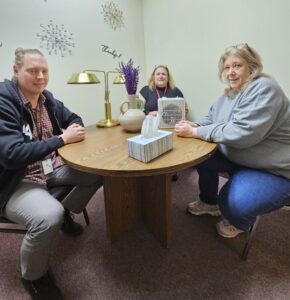
And often, they are doing all of that while also seeing the bigger picture.
Matthew Freimuth (LCSW), a Social Worker in our Community Support Program, captured an important reality of the work, explaining that, “when someone is dealing with immediate stressors, there’s only so far you can go.” If someone is trying to manage a rent increase, loss of benefits, or another urgent crisis, those realities often have to be addressed before deeper emotional work can begin. Helping people stabilize the present moment is often the first step toward long-term healing and progress.
That balance between emotional support and practical problem-solving is central to social work.
CCA currently employs 69 social workers across 21 programs, along with four more serving at the administrative level. They collaborate with nurses, counselors, case managers, and other providers to support people in ways that reflect the complexity of their lives. Our social worker might help someone access housing, coordinate care between providers, connect them to benefits, or build coping strategies that help them move through a difficult period. Often, it is all of those things at once.
That collaboration is also part of the culture within the organization. Social workers often rely on one another’s experience and insight when navigating complex situations.
That spirit of collaboration also came through in Brian Fletcher’s (LCSW, QMHP, LCDP) reflection on the culture at CCA: “Here at CCA, we all have talents. We all have gifts that we can share to help each other. Iron sharpens iron. We encourage one another.”
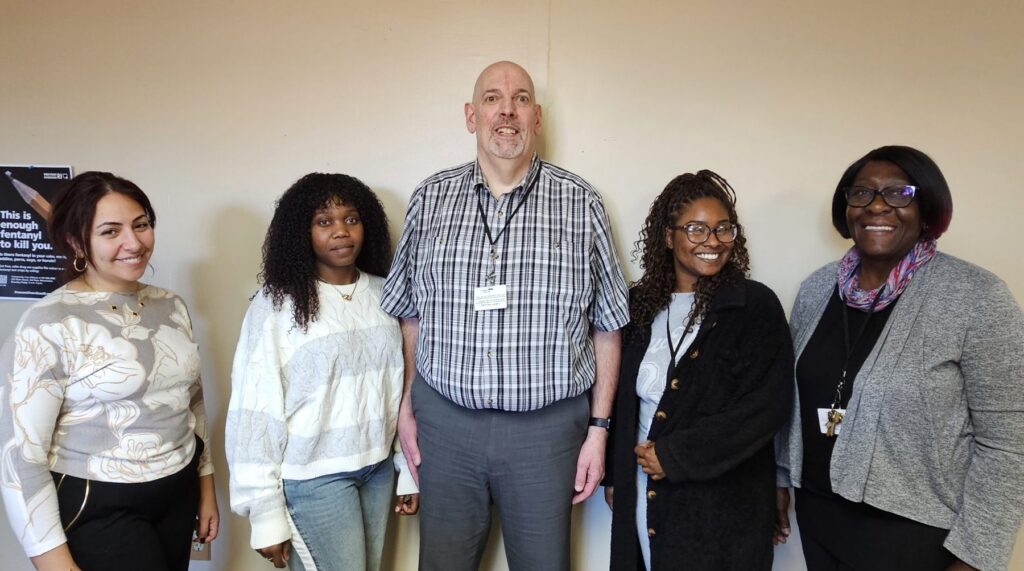
The work can be challenging, but staff say that encouragement and teamwork help sustain them.
Progress in social work also tends to happen in ways that may not always be obvious from the outside. Patricia Belanger (LCSW, CCSP) described noticing small but powerful moments — “a client laughing in a waiting room after months of isolation, or someone going months without a hospitalization or relapse.” These changes may seem small, but they represent meaningful steps forward.
Fletcher also spoke to the importance of encouragement in helping clients move forward: “If we encourage someone to take that first big step, they start to believe they can keep going — taking smaller steps and eventually another big step.”
Social work involves understanding the systems that shape people’s lives.
Many social workers focus not only on immediate support, but also on strengthening programs, improving services, and advocating for changes that make care easier to access across communities. This is called Macro Social Work.
At its core, however, the work remains deeply human. Claire Perretta (LMHC, LCDP, CAADC), Case Manager, summed it up simply: “There’s nothing more interesting than people.”
During National Social Work Month, Community Care Alliance celebrates the dedication, compassion, and persistence of our social workers who show up every day to support individuals, families, and communities.
Their work is often quiet and behind the scenes, but its impact is lasting. Through care, collaboration, and a deep belief in people’s resilience, CCA’s social workers help others take the next step forward.